

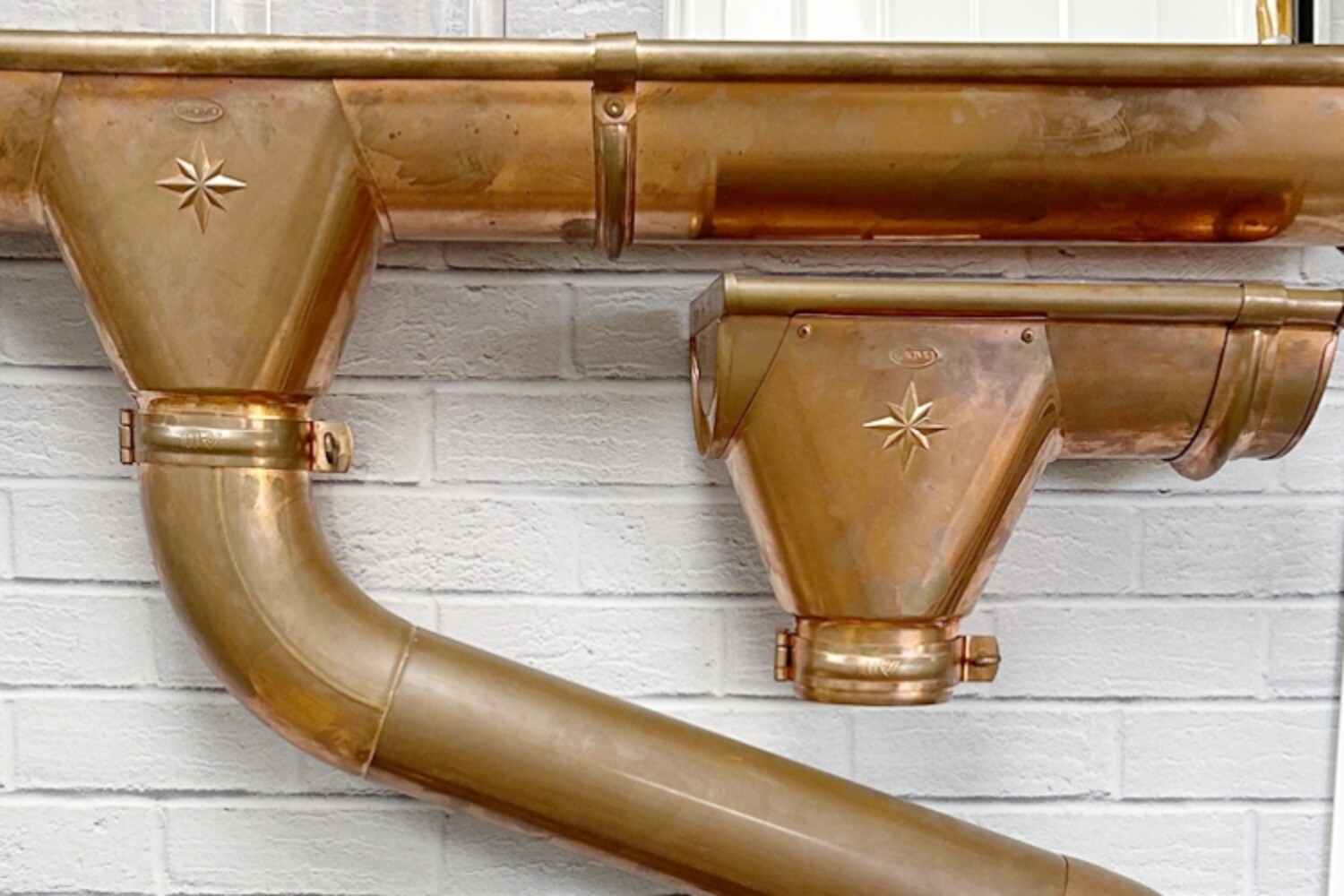
Choosing between copper and aluminum gutters is one of the most common spec decisions South Florida contractors face on high-end residential and commercial projects. Both materials perform well in the Florida climate, but they serve very different client profiles, price points, and project types. This guide covers when copper earns its premium — and when aluminum is still the smarter call.
Copper vs. Aluminum: The Honest Comparison
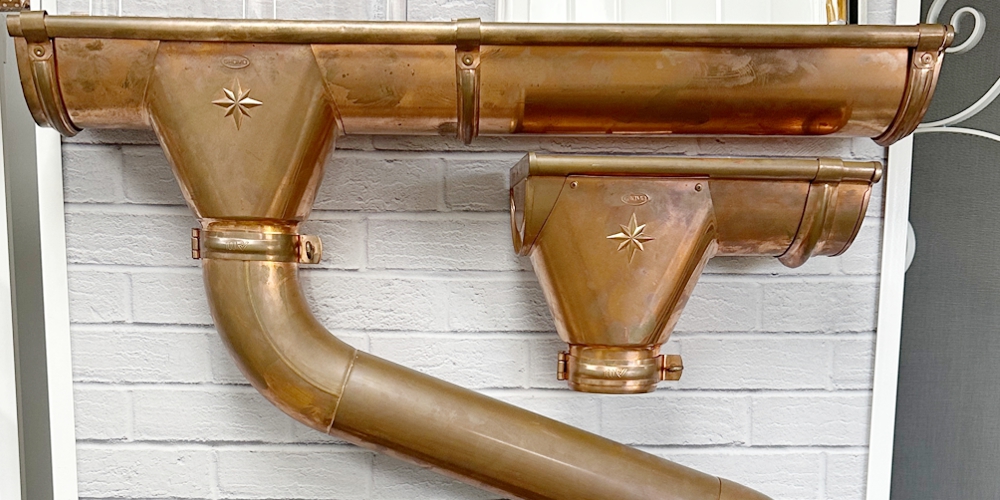
Both copper and aluminum are excellent gutter materials for Florida. The choice comes down to the specific project and client:
| Factor | Aluminum | Copper |
|---|---|---|
| Material cost | $ | $$$$ |
| Installation cost | Standard | Premium (soldering) |
| Lifespan | 20-30 years | 50-80 years |
| Maintenance | None | None |
| Appearance | Consistent color | Develops patina |
| Salt air resistance | Excellent | Excellent |
| Theft risk | Low | Moderate-High |
| Client profile | Standard residential | Luxury, historic, commercial |
Gauge and Thickness Standards for Florida
Copper gutter thickness is measured in ounces per square foot, not inches. The two main options are:
- 16 oz copper — The residential standard. Equivalent to about 0.0216 inches thick. Appropriate for most South Florida homes where impact risk is moderate.
- 20 oz copper — Heavier-gauge commercial material (~0.027 inches). Recommended for coastal properties, oceanfront installations, and any project where falling debris from mature trees is a concern.
For reference, the Copper Development Association Architectural Handbook is the industry-standard reference for copper gutter gauges, joint details, and expansion allowances.
Copper Gutter Sizing for Florida Rainfall
Florida averages roughly 54 inches of rainfall per year, with South Florida counties often exceeding 60 inches. Storm cells during hurricane season can dump 3-6 inches in a single hour — far above the design thresholds of standard 5″ K-style gutters in other states.
For South Florida copper installations, contractors should spec:
- 6″ K-style copper for most roof areas (instead of the 5″ default common outside FL)
- 4″ round downspouts for runs exceeding 25 linear ft of gutter
- Oversized miters at inside corners where two roof planes concentrate flow
When to Recommend Copper
Historic districts — Many South Florida historic districts (Coral Gables, Palm Beach, St. Augustine) require or strongly prefer copper for gutters and downspouts on historically designated properties.
Luxury new construction — Homes above $1.5M often have design specifications that call for copper roofing details, including gutters. The architect has already spec’d it; the contractor needs a wholesale source.
Commercial hospitality — High-end hotels, restaurants, and resorts use copper as an architectural feature. The patina signals quality and permanence.
Long-term value clients — Some homeowners understand that a $3,000 copper gutter system that lasts 60 years costs less per year than a $900 aluminum system replaced twice over the same period.
When to Stick with Aluminum
- Budget-conscious projects
- Properties with theft risk (vacant periods, construction sites)
- Any project where the client doesn’t specifically value the copper aesthetic
- Spec homes and investment properties
- HOA-restricted communities where copper isn’t on the approved materials list
For most residential work, our aluminum gutter systems are the right call — lower cost, fewer installation headaches, and the same 20-30 year lifespan Florida contractors rely on.
The Patina Conversation
New copper is bright, shiny, and reddish-gold. Over 6-24 months (faster near the ocean), it darkens to brown, then gradually develops the characteristic green patina (verdigris).
This is the most important conversation to have with your copper gutter client. Some clients love the patina. Others expected permanent shiny copper and are unhappy when it changes. Show them examples of aged copper in their neighborhood before they commit.
South Florida’s salt air accelerates patina development. A copper gutter in Coral Gables will patina noticeably faster than one in Orlando.
Installation: Soldering vs. Crimping
Copper gutter joints are soldered, not crimped or sealed like aluminum. This requires a torch and solder equipment, lead-free solder (code requirement), experience with copper soldering technique, and more time per joint than aluminum crimp connections.
Lead-free compliance: Federal and Florida plumbing code require lead-free solder (less than 0.2% lead) on any system that could contact potable water — including copper downspouts that feed cisterns or irrigation reservoirs. Use 95/5 tin-antimony or a silver-bearing lead-free alloy.
Pricing implication: Copper gutter installation labor rates are typically 40-60% higher than aluminum to account for the additional skill and time required. Factor this into your bid.
Preventing Copper Gutter Theft
Copper scrap theft is a real risk on vacant properties, during construction, and in some neighborhoods. Recommendations for contractors:
- Install copper gutters as one of the final steps before occupancy, not during framing
- Use security screws on downspout straps at ground level
- Document serial numbers and installation photos for insurance
- Consider powder-coated “copper-look” aluminum for high-theft areas — 90% of the aesthetic at 20% of the material value
Frequently Asked Questions
How much more do copper gutters cost than aluminum in South Florida?
Material cost alone runs 4-6x higher. Installed, expect copper to be 3-4x the total cost of an aluminum system on the same house, because labor is also higher due to soldering.
Do copper gutters require special brackets or hangers?
Yes. Use copper or stainless steel hangers only. Mixing copper with galvanized or zinc hangers causes galvanic corrosion that will destroy the hangers within a few years.
How long until copper gutters develop full green patina in Florida?
In coastal South Florida, expect noticeable brown within 3-6 months and green verdigris patches in 2-5 years. Inland locations patina more slowly.
Can copper gutters be used on a metal roof?
Yes, but the roof must be copper, stainless steel, or a compatible alloy. Copper in direct contact with bare aluminum or galvanized steel roofing causes galvanic corrosion. A dielectric membrane is required between incompatible metals.
Does Florida Building Code allow copper gutters in High-Velocity Hurricane Zones?
Yes. Copper gutters are permitted in Miami-Dade and Broward HVHZ areas, but the attachment system must meet the same wind-load requirements as any other gutter material. See the Florida Building Code and our FBC compliance guide for details.
Salt Air and Long-Term Performance
South Florida’s atmosphere is one of the most aggressive environments on Earth for exterior metals. Airborne chloride concentrations within a mile of the coast routinely exceed 300 mg/m²/day — an order of magnitude higher than inland levels. Both copper and anodized aluminum handle this well, but the performance curves look different:
- Copper forms a self-protecting patina layer (CuCO₃·Cu(OH)₂) that seals the metal against further corrosion. The deeper the patina, the better the protection. This is why historic copper roofs in Miami, Tampa, and Key West are still in service after 60-80 years.
- Aluminum relies on its powder coat or anodized finish for corrosion protection. Once the finish is compromised — scratches, impact damage, cut edges — the substrate oxidizes rapidly in salt air. Lifespan depends heavily on coating quality and maintenance.
For contractors bidding on oceanfront or direct-beachfront projects, copper’s self-healing behavior is often the deciding factor — especially on visible downspouts where coating damage from landscaping equipment is common.
Specifying Copper vs. Color-Matched Aluminum
A frequent alternative on cost-sensitive projects is color-matched powder-coated aluminum that visually resembles copper. This works for approximately 5-10 years before the finish begins to show its origins, but it’s a legitimate middle path for clients who want the aesthetic without the investment. Discuss both options openly with your client — the decision should be theirs, informed by realistic long-term expectations.
Wholesale Copper Gutters in Florida
Classic Metals Suppliers stocks copper gutters for contractor wholesale purchase at four Florida locations: Opa-locka, Miami, West Palm Beach, and Tampa. Call (305) 822-7737 or toll-free (888) 638-2501 for current pricing and availability.
Related reading: Best aluminum suppliers in Florida | How to choose the right supplier | Material delivery guide